

FROM STEVENS TO RED CEDAR
WHY WE WANT TO CHANGE OUR NAME
Who WE ARE

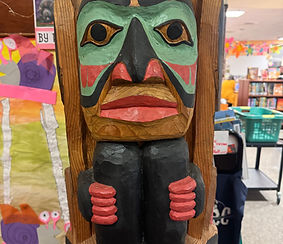.jpg)
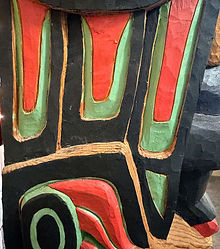.jpg)
We are on the ancestral land of the Duwamish and Coast Salish peoples.
We are a community that values safety, belonging, diversity, and social justice.
Red Cedar Elementary School honors the land, the past, and our shared future.
ROOTED IN CEDAR
Long before a school stood on Capitol Hill, the land was quiet and green, covered in towering red cedar trees. For thousands of years, this place was part of the ancestral homeland of the Duwamish and Coast Salish peoples, who lived, gathered, fished, and cared for the land around Lake Union and Lake Washington. They were the original stewards of this place.
As the city of Seattle grew in the early 1900s, the land was taken from the Duwamish following forced treaties and broken promises. In 1906, a school was built here, carrying the name of a man whose legacy is tied to violence, dispossession, and deep harm to Indigenous families. For many years, that name caused pain—especially to Native residents whose history and experiences were ignored.
Over time, our school community began to listen. Families, staff, and students came together through conversations, letters, and meetings, asking hard questions about who we are and what we stand for. We worked to make our school a place where families want to be—a place grounded in care, belonging, and justice. And we realized that our name did not reflect our values.
Today, our school is diverse and deeply committed to social justice. We serve families of many races, cultures, identities, abilities, and life experiences—those who were born here, those who came seeking opportunity, and those who came seeking safety. We believe everyone deserves to feel safe, welcomed, and valued.
Choosing a new name is not symbolic—it is an act of accountability.
We recommend the name Red Cedar Elementary School to honor the land as it existed before us and to acknowledge the people who were here first. In Coast Salish tradition, places are named for what stood there before. Red cedar trees once grew where our school now stands, and they remain a symbol of resilience, continuity, and respect.
By choosing this name, we seek to acknowledge the Duwamish people, to recognize the harm done in the past, and to show—through action—that their community matters to us in the past, present, and future. This name is a commitment—to tell the truth, to listen to Indigenous voices, and to align our actions with our values.
Red Cedar Elementary reflects who we are today and who we strive to be: a school rooted in truth, respect, and belonging.
For more than 100 years, the school has evolved in response to enrollment changes, district plans, and community needs. The building remains a designated landmark and a central part of the neighborhood.
In recent years, the school has experienced declining enrollment, reflecting a range of factors including broader demographic changes and school choice patterns across the district. At the same time, the community has reflected on whether the school’s current name represents the identity and values of the school today. Isaac Stevens is a historically significant figure whose legacy is complex and closely tied to events that remain difficult for many in our region. Through community discussion and reflection, families and staff concluded that the current name does not fully represent the school’s present-day community or its aspirations for the future. A new, place-based name offers an opportunity to begin the school’s next chapter with a clear identity that honors the history of the site while supporting continued growth and enrollment in the years ahead.
The community believes that adopting a place-based name such as Red Cedar Elementary School provides an opportunity for a fresh start—one that acknowledges the past while establishing a clear and welcoming identity for the future.


School History & Overview
Stevens Elementary School opened in 1906 on Capitol Hill after the site was purchased in 1904 during Seattle’s northward expansion. The original eight-room, two-story Colonial Revival building remains the architectural core of the campus and was designated a City of Seattle landmark in 1981.
Over more than a century, the school has expanded and modernized to meet changing needs. Major renovations completed in 2001 strengthened and preserved the historic structure while adding updated classroom space, a modern cafeteria and gymnasium, and additional facilities. The campus now includes a large playground, track, kickball courts, and a covered basketball court. The gym addition features a climbing wall and stage for assemblies and community events. Eco-focused upgrades include solar panels and water bottle filling stations. The school currently holds the highest building condition score among occupied SPS schools in the central region.
Located across from Interlaken Park and two blocks from Volunteer Park, the school benefits from direct access to natural spaces. Its quiet, centrally located campus makes it one of the most walked-, biked-, and public-transportation-accessed schools in Seattle.
Enrollment exceeded 500 students in the late 1950s and reached 406 in 2013. As of 2020, enrollment was 193 students, serving grades K–5. Over time, the school has adapted to district-wide reorganizations, including the 4-4-4 plan in 1970 and the introduction of the multi-opportunity model in 1978. The TOPS program operated on site from 1982 until relocating in 1991.
Academic Programs and Student Support
The school hosts a range of programs, including:
-
Interlaken Pre-K (Seattle Preschool Program)
-
Listen & Talk Preschool (Deaf and hard-of-hearing services)
-
Integrated Special Education services
-
Multi Language Learner (MLL) services
-
Dedicated approach Highly Capable and Advanced Learners
-
Kids Club child care (133 licensed spots -largest in the area; 7:00 a.m.–6:00 p.m.; holiday and summer programming)
District-adopted curricula include:
-
ELA: Center for Collaborative Classroom (Being a Reader, Making Meaning, Being a Writer, SIPPS intervention)
-
Math: enVision
-
Science: Amplify
-
Social Studies: Since Time Immemorial
-
Social Emotional Learning: R.U.L.E.R.
The school includes a reading specialist with a dedicated classroom, librarian, art, music, and PE teachers, a social worker, occupational therapist, extended resource support teachers, instructional assistants in each K–5 classroom, and additional roaming instructional assistants. Many teachers have more than 20 years of tenure.
Enrichment Activities and Extracurriculars
Students participate in a wide range of enrichment opportunities, including:
-
Green Team (Climate Change & Lunchroom Sustainability Program)
-
Foxbury Farms outdoor education classes
-
Regular author visits and guest experts
-
Field trips to theaters, nature centers, museums, and other community sites
-
Choir performances, Art Walk, and pottery
-
Cross-grade town halls and reading buddies
-
Instrumental and vocal music
-
Global Reading Challenge
-
Jump-a-thon (jump rope instruction and school-wide event)
-
Biking instruction
-
Marathon running program
-
Dedicated after-school enrichment (ASE) programs: including chess, art around the world and lego robotics